| CAS NO: | 218600-53-4 |
| 规格: | ≥98% |
| 包装 | 价格(元) |
| 25mg | 电议 |
| 50mg | 电议 |
| 100mg | 电议 |
| 250mg | 电议 |
| 500mg | 电议 |
| 1g | 电议 |
| Molecular Weight (MW) | 505.69 |
|---|---|
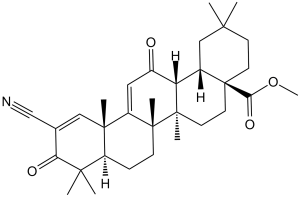
| Formula | C32H43NO4 |
| CAS No. | 218600-53-4 |
| Storage | -20℃ for 3 years in powder form |
| -80℃ for 2 years in solvent | |
| Solubility (In vitro) | DMSO: 21 mg/mL (41.5 mM) |
| Water: <1 mg/mL | |
| Ethanol: <1 mg/mL | |
| Solubility (In vivo) | 4% DMSO+30% PEG 300+5% Tween+ddH2O: 5mg/mL |
| Synonyms | NSC-713200; NSC713200; CDDO Methyl Ester; Bardoxolone methyl; CDDOMe; NSC 713200; RTA 402; RTA-402; RTA402;TP-155; TP155; TP 155 |
| In Vitro | In vitro activity: Bardoxolone Methyl exhibits potent inhibitory activities against production of nitric oxide induced by interferon-Y in mouse macrophages with IC50 of 0.1 NM. Bardoxolone Methyl decreases the viability of leukemic HL-60, KG-1, and NB4 cells with IC50 of 0.4, 0.4, and 0.27 μM, respectively. CDDO-Me induces pro-apoptotic Bax protein, inhibits the activation of ERK1/2, and it blocks Bcl-2 phosphorylation, which contributes to the induction of apoptosis. Bardoxolone Methyl potently inhibits both constitutive and inducible NF-kappaB activated by TNF, interleukin (IL)-1beta, phorbol ester, okadaic acid, hydrogen peroxide, lipopolysaccharide, and cigarette smoke. Kinase Assay: To determine the effect of CDDO-Me on TNF-induced IKK activation, IKK is analyzed. Briefly, the IKK complex from whole-cell extracts was precipitated with antibody against IKKα and IKKβ and then treated with protein A/G-Sepharose beads. After 2 hours, the beads are washed with lysis buffer and then resuspended in a kinase assay mixture containing 50 mmol/L HEPES (pH 7.4), 20 mmol/L MgCl2, 2 mmol/L DTT, 20 μCi [γ-32P]ATP, 10 μmol/L unlabeled ATP, and 2 μg of substrate glutathione S-transferase-IκBα (amino acids 1-54). After incubation at 30°C for 30 minutes, the reaction is terminated by boiling with SDS sample buffer for 5 minutes. Finally, the protein is resolved on 10% SDS-PAGE, the gel is dried, and the radioactive bands are visualized with a Storm820. To determine the total amounts of IKK-α and IKK-β in each sample, 50 μg of whole-cell proteins are resolved on 7.5% SDS-PAGE, electrotransferred to a nitrocellulose membrane, and then blotted with either anti-IKK-α or anti-IKK-β antibody. Cell Assay: Leukemic cell lines are cultured at a density of 3.0 × 10⁵ cells/mL, and AML mononuclear cells are cultured at 5 × 10⁵ cells/mL in the presence or absence of indicated concentrations of CDDO-Me. Appropriate amounts of DMSO (final concentration less than 0.05%) are included as control. For cytotoxicity studies, 1 μM ara-C is added to the cultures. After 24 to 72 hours, viable cells are counted with the trypan blue dye exclusion method using a hematocytometer. |
|---|---|
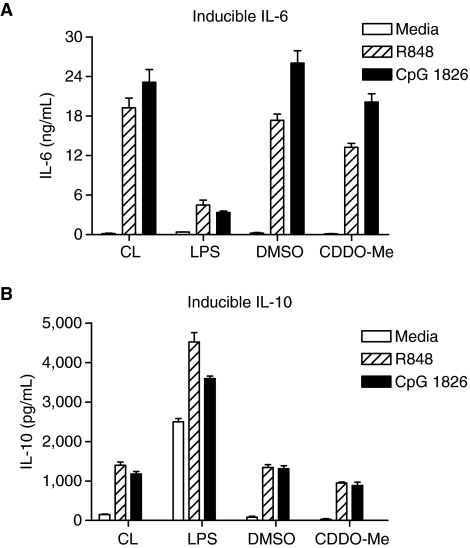
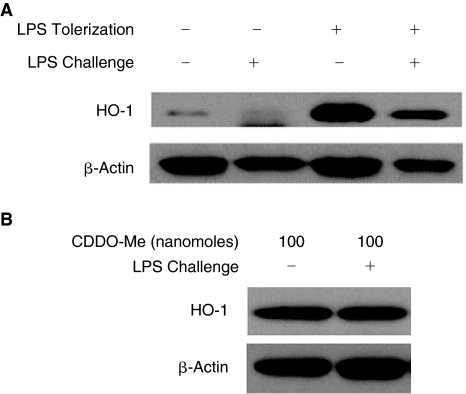
| In Vivo | Bardoxolone Methyl (60 mg/kg) reduces the number, size, and severity of lung tumors in vivo. Bardoxolone Methyl significantly reduces the in vivo inflammatory cytokine response following LPS challenge, induces HO-1 protein expression in the spleen, and protects mice against lethal-dose LPS. |
| Animal model | Female A/J mice are injected i.p. with vinyl carbamate. |
| Formulation & Dosage | Dissolved in DMSO; 60 mg/kg; p.o. |
| References | J Med Chem. 2000 Nov 2;43(22):4233-46; Cancer Res. 2007 Mar 15;67(6):2414-9; J Interferon Cytokine Res. 2010 Jul;30(7):497-508. |
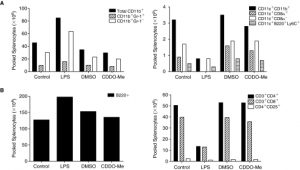 Synthetic triterpenoid, CDDO-Me pretreatment preserves levels of innate and adaptive immune cell populations in spleen, while lipopolysaccharide (LPS) pretreatment reduces splenocyte immune cell populations. J Interferon Cytokine Res. 2010 Jul; 30(7): 497–508. | 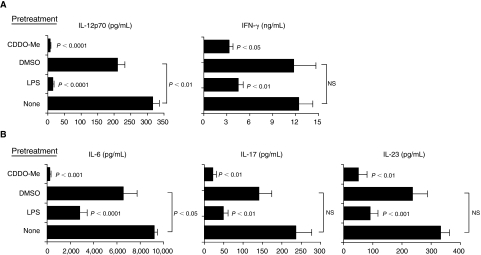 | 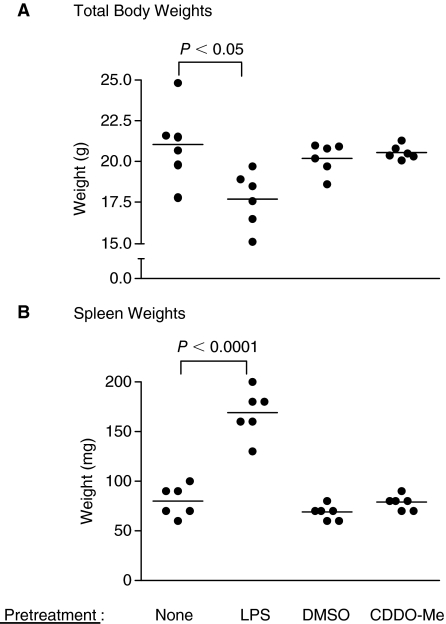 |
 |  |  |
 m.cnreagent.com